Summary
Seminole Tribe, Miccouskee Tribe, Cypress Izaak Walton League of America, private landowners and others partner to reintroduce deer back to the Everglades where populations dropped by more than 90 percent in some areasIn the ‘Nick’ of time ‘Elf’ partnership with tribes brings deer back to the Everglades
December 18, 2025
‘Elf’ partnership with tribes brings deer back to the Everglades
BY KELLY J FARRELL
kelly.farrell@floridaweekly.com

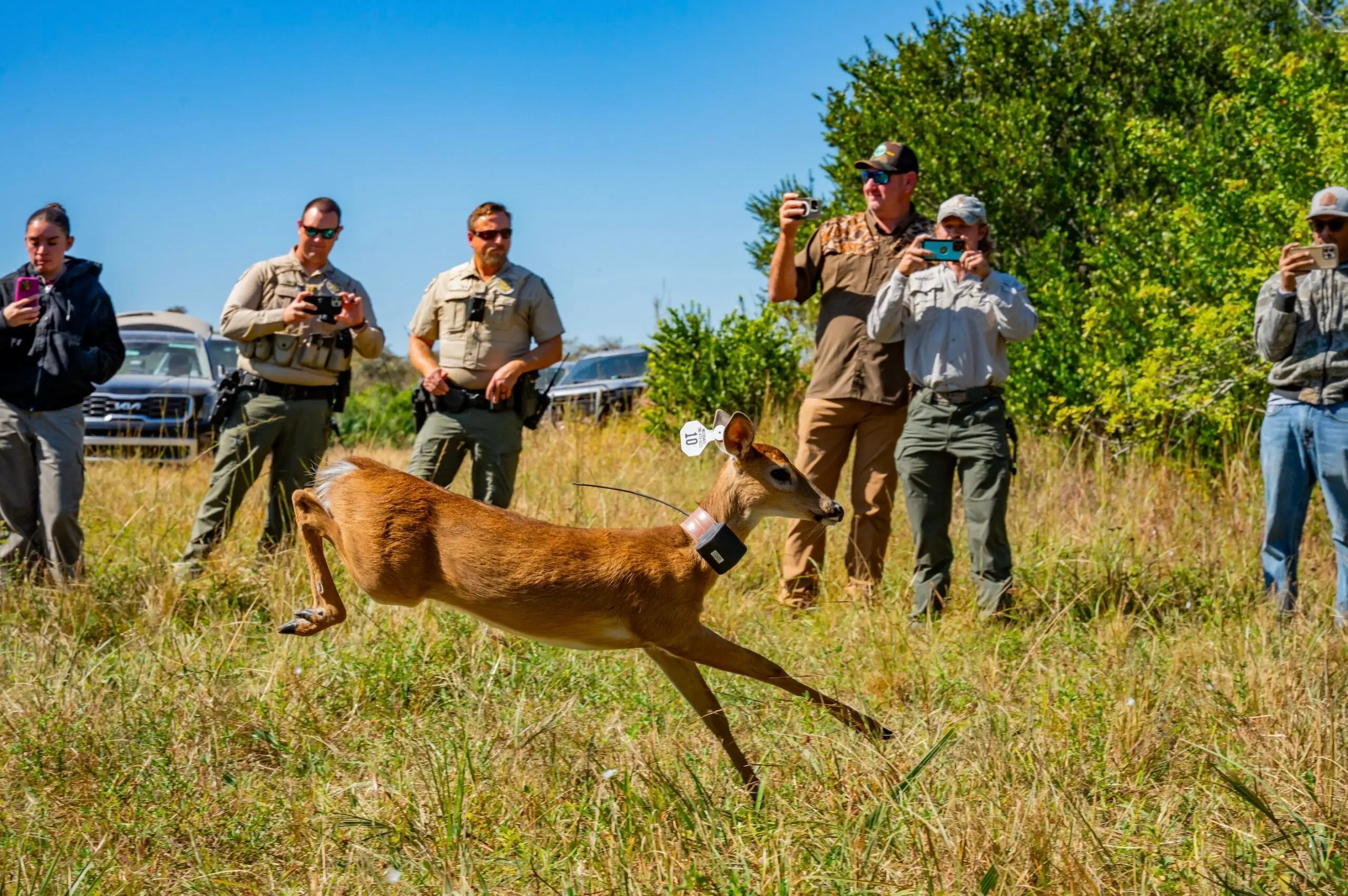
Seminole Tribe, Miccouskee Tribe, Cypress Izaak Walton League of America, private landowners and others partner to reintroduce deer back to the Everglades where populations dropped by more than 90 percent in some areas. -RC GILLILAND / COURTESY PHOTO
We all know that Christmas does not come without the arrival of deer. Luckily, a man named Mike “Elf,” short for his last name Elfenbein—despite his tall stature—is working with both of Florida’s federally recognized tribes to bring deer back to the Everglades after years of their populations—and that of all land mammals on the Miccosukee Tribe of Indians of Florida reservation—dwindling by more than 90 percent. Hunters and tribes, including the Seminole Tribe and Miccosukee Tribe of Indians of Florida, were among the first people to notice and then document the populations of land animals plummeting in the Everglades. Years later, Florida Fish and Wildlife Conservation Commission verified what these other individuals and organizations were reporting.

Luke Hilgemann with International Order of T. Roosevelt, Florida Representative Lauren Melo and Liesa Priddy with a deer being moved from their private land to the Everglades. -COURTESY PHOTO
“It started for me 20 years ago with the recognition that deer were disappearing from the Everglades,” said Elfenbein, executive director of the Cypress Chapter of the Izaak Walton League of America.
Raccoons, squirrels, rabbits—all are rarely seen in some areas of the Everglades to the shock of people living in the cities thinking the Everglades is nearly untouched, or undamaged, by man.
However, the management of water—in large part for the benefit of the cities and for Everglades National Park—came at the extreme detriment to other areas of the Glades. The primary cause for the loss of the land mammals was water management, said Elfenbein.
The area was unnaturally flooded for long periods of time, killing many animals and their young, including nests of turtle eggs, as noted by Everglades resident Betty Osceola, vice president of the Cypress IWLA and a member of the Miccosukee Tribe.
Nature can often adjust to the changes of the natural world, but too often, largescale manmade interventions become more than the natural world can adjust to—such was the case for the deer, said Osceola, who long cried out for help as she watched and documented on social media animals dying due to the unnatural water inundation.
Now, governments are allowing water to continue flowing south beyond that area of the Everglades, through what’s known as Water Conservation Area 3A near where Osceola lives, so that it doesn’t sustain such long periods of unnatural flooding. Instead, more of the water continues to flow out to the bay as it once did.
Previously, the management of the levies pushed the deer and other animals that could not get out in time to gridlocked areas of land where they then became easy prey to invasive Burmese pythons, panther and bear, said Elfenbein.
Now that the major cause of the problem has been corrected with an approved water management deviation by the US Army Corps of Engineers and other government entities, the Cypress IWLA, in partnership with landowners and tribal scientists, are bringing deer back to the Everglades by capturing them from nearby private lands in Collier and Hendry counties.
They tag, document, release, monitor and protect them. The deer are collared or ear-tagged and will be monitored to gather data while reestablishing the population. More than 20 deer were already brought to the area and some are pregnant, Elfenbein said.
“Our ranch is one of the properties closest to the Miccosukee property, so our deer are genetically most like deer that historically have lived on the tribal lands. We felt that it was the right thing to do for our southern neighbors, to share our deer with Indigenous residents of Florida,” said Liesa Priddy, former FWC Commissioner. “To think that there are no deer on their land in the Everglades is unthinkable to me.”
Whether in honor of Christmas or for other reasons, contribute to saving the Everglades deer population, visit cypressiwla.org/deerfriends.

Betty Osceola rests her hand on the deer as others support reintroduction of the animals into the Everglades where their populations plummeted by more than 90 percent in some areas. -RC GILLILAND / COURTESY PHOTO